The Things They
Are
On Richard Caldicott’s series, Untitled 2008
Derek
Horton
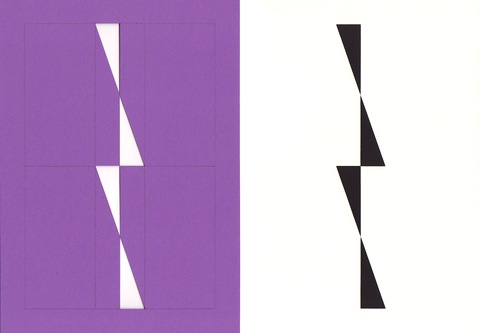
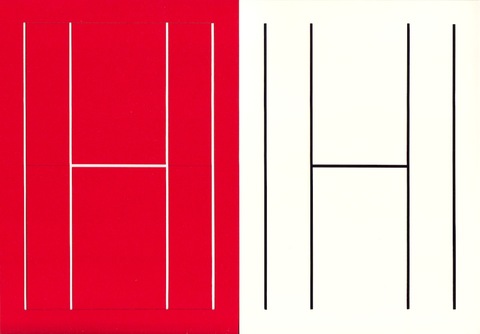
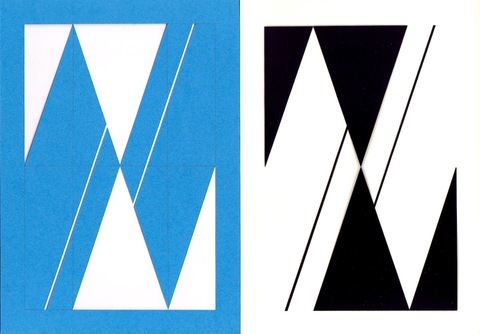
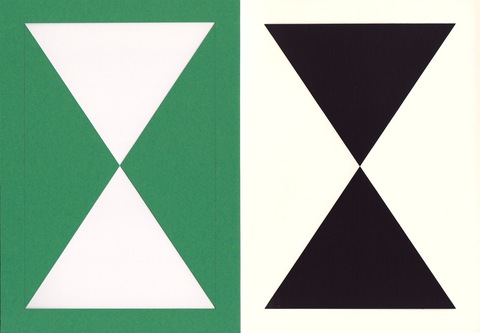
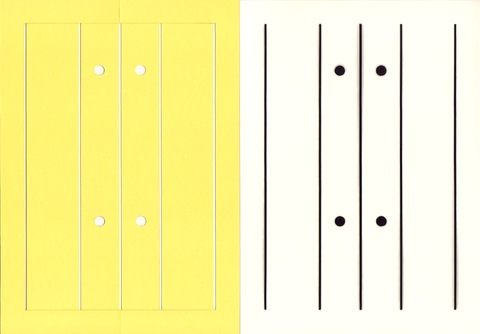
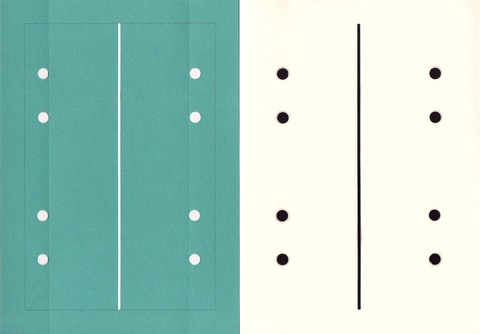
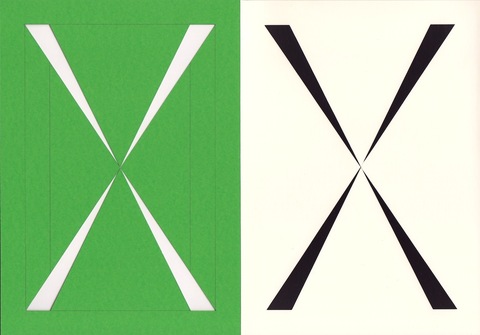
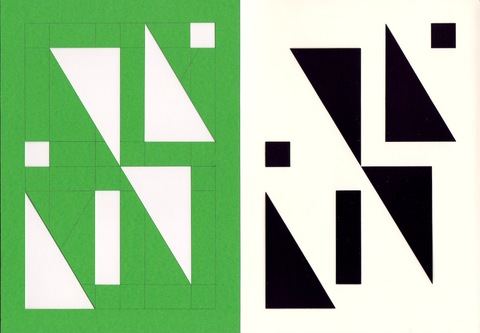
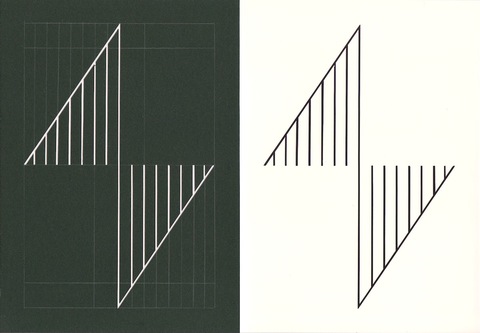
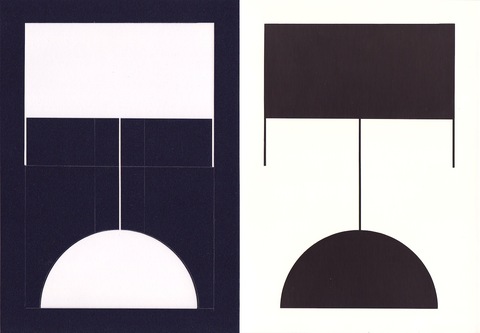
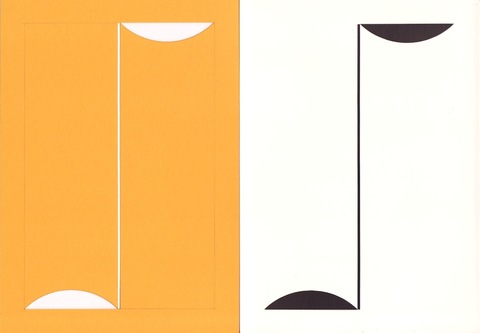
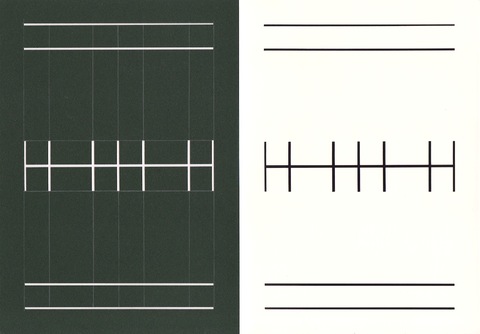
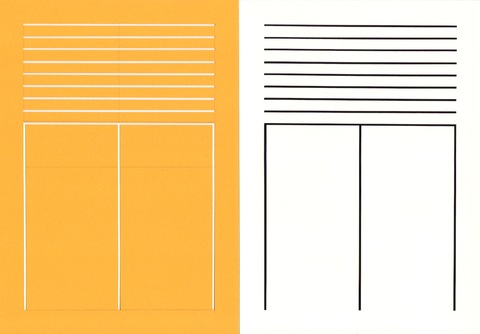
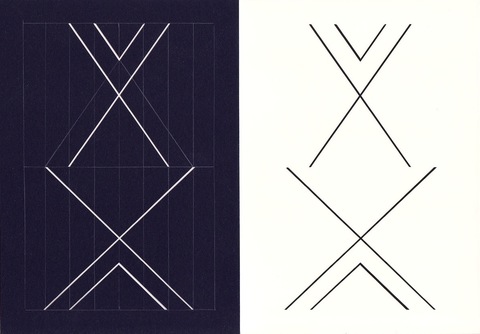
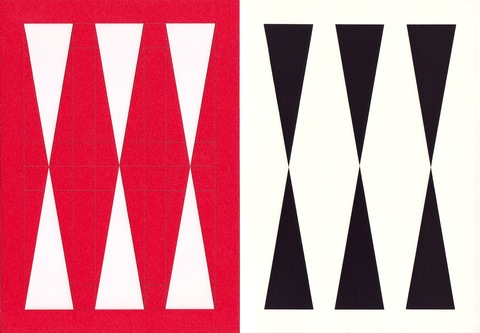
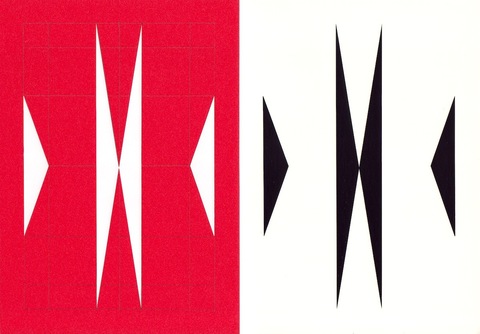
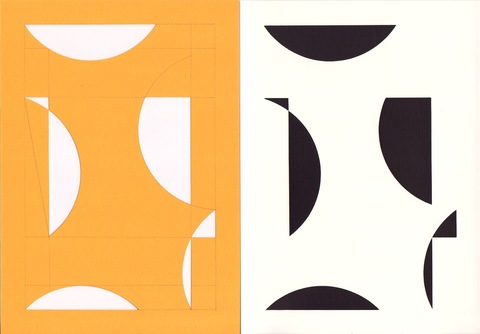
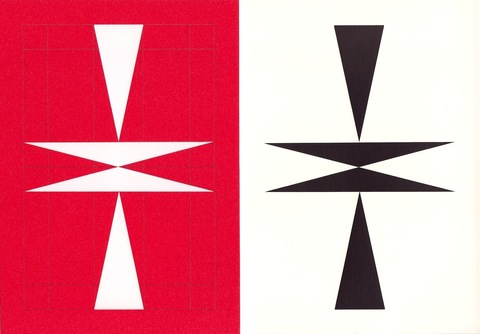
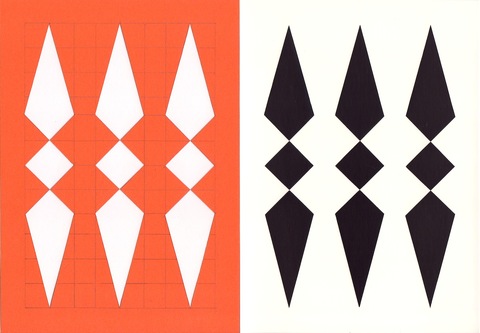
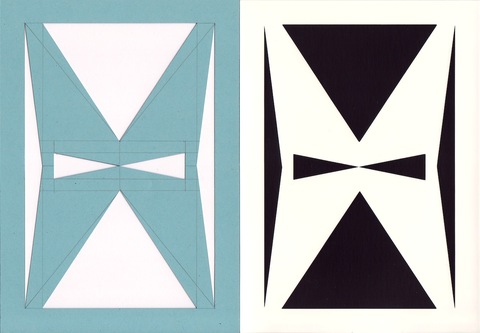
Richard Caldicott’s new series of works, Untitled
2008, is at once both a return and a new departure.
The series marks a return to the object, but with
a new found assertiveness in the sheer visual presence
of the object’s centrality that is essentially
sculptural. The constructed facture of all Caldicott’s
previous photographs means of course that the object
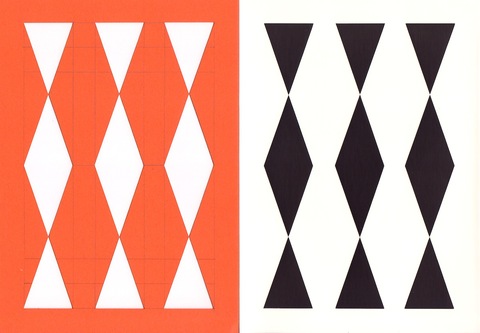
has never really gone away; even in the architecturally
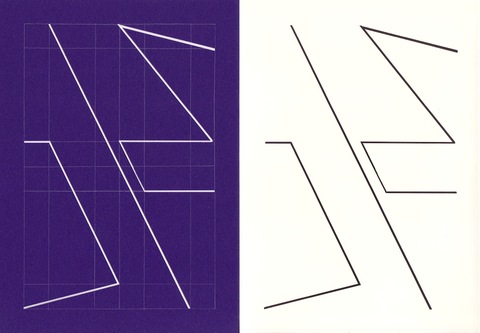
inspired compositions of 2003 or the geometric abstractions
of the Loop series of 2005 or the Script series of
2006, the images are always dependent on the objective
manipulation of physical material. But not since the
works employing Tupperware, made mostly during the
1990s, has the photographed object been so evidently
visible. This return to a means of construction wherein
the component objects utilised in the photographs
remain recognisable though, is only a part of what
distinguishes this new series from Caldicott’s
other recent work. The everyday plastic objects from
which the images are made are transformed into resonant
new columnar objects that read simultaneously as iconic
sculptural forms and as the central focus of photographs
in which the dense black ground against which they
are seen takes on an equally weighty presence. The
repeated motif is a kind of 21st century nod to Brancusi’s
Endless Column that forms the Newman-like stripe or
Flavin-like strip down the centre of a minimalist
rectilinear composition. A less obvious but equally
pertinent comparison is with the patterns of repeated
pictorial elements in the 1960s Composites photographs
of Ray K Metzker.
One
of the characteristics of the kinds of plastics from
which the mass-produced things utilised in these photographs
are made is that their colour is embodied in their
material, so that colour and form become indivisible.
The difference between a thing that is coloured and
a thing to which colour has been applied is immediately
recognisable and perceptually very significant (think
for instance of the difference between the painted
planes and bars of a Rietveld chair and the moulded
plastic ‘colourform’ of an Eames plastic
chair). The objective unity of colour and form inherent
in the material production of this series is central
to its object-like sculptural qualities that are unique
in Caldicott’s recent work. This characteristic
of coloured plastic means that even when the material
is transparent enough to allow light through, it retains
its colour and consequently affects the colour of
the light. Photography is of course a light-based
medium but the particular use of light in these works
exploits the varying densities of the plastics and
their colourings in a play between opaque and transparent
forms. This reinforces the instability of spatial
divisions and an ambiguity between flatness and depth.
Given the way that the mundane functional origins
of the things from which these photographs are made
remain visible even as they are transformed into objects
of contemplation, this play between opaque and transparent
forms is paralleled by a play between the literal
world and abstract form.
It
may seem at odds with the abstract and formalist nature
of Caldicott’s oeuvre to quote a documentary
street photographer in relation to his work, but Gary
Winogrand’s assertion that he took photographs
“to find out what things will look like photographed”
is relevant here. And, crucially, what Caldicott finds
out is that they can look very different to the things
they are. Winogrand also said, speaking of Walker
Evans, that “his photographs are about how what
is photographed is changed by being photographed,
and how things exist in photographs”. This is
very much the case in relation to the mundane things
used by Caldicott, but if his photographs are ‘about’
anything, as opposed to being the things they are
themselves, they are about the power of the imagination
to transform the material world of objects that surrounds
us and create sensuous, elegant and pristinely new
things from it.
A
photographer perhaps closer to Caldicott’s sensibilities,
Aaron Siskind, has said: “When I make a photograph
I want it to be an altogether new object, complete
and self-contained, whose basic condition is order,
unlike the world of events and actions, whose permanent
condition is change and disorder”. The order
in these self-contained new objects of Caldicott’s
is one that derives from his usual discipline and
restraint; a minimalist aesthetic that works within
the constraints of the simplest of structures and
forms whilst imbuing them with a sensual richness
that borders on decadence. Like a kind of alchemy,
the production of these works uses technological processes
to transform uniform components that are themselves
the products of industrialised manufacture into singular
objects that generate a separate existence from a
mass of copies. Varying between densely coloured opacity,
translucence and reflective brilliance, their surfaces
generate a seductive richness that belies both the
austerity of their origins and the simplicity of their
form. In this they are the epitome of ‘cool’,
in the sense that it has been defined by Dave Hickey
as “minimalism redeemed with eros and atmosphere”.
Relevant examples of Ray K Metzker’s
Composites include Philly Walk (1965), Car and Street
Lamp (1966), Yikes (1966) and Stairburst (1969).
Garry Winogrand, ‘Monkeys Make the Problem More
Difficult’: A Collective Interview with Garry
Winogrand, transcribed by Dennis Longwell, in Peninah
R. Petruck [ed.], The Camera Viewed: Writings on Twentieth
Century Photography, Vol.II, New York: Dutton, 1979
(p.127)
Garry Winogrand in Walker Evans, The Hungry Eye, London:
Thames & Hudson, 1993 (p.12)
Aaron Siskind in Brooks Johnson [ed.], Photography
Speaks, New York: Aperture, 2004 (p.184)
Dave Hickey, Cool on Cool: William Claxton and the
Way the Music Looked, in Elizabeth Armstrong [ed.],
Birth of the Cool: California Art, Design and Culture
at Mid-century, Newport Beach California: Orange County
Museum of Art and Prestel Publishing, 2007 (p.137)
<
back